Building a future through horticulture: Rollande’s journey
Fourteen years ago, Rollande started farming and took her sister as business partner. Together, they currently cultivate over three acres of land and rely solely on farming as their primary source of income. Through farming, Rollande not only supports her familybut could also send her son to university.
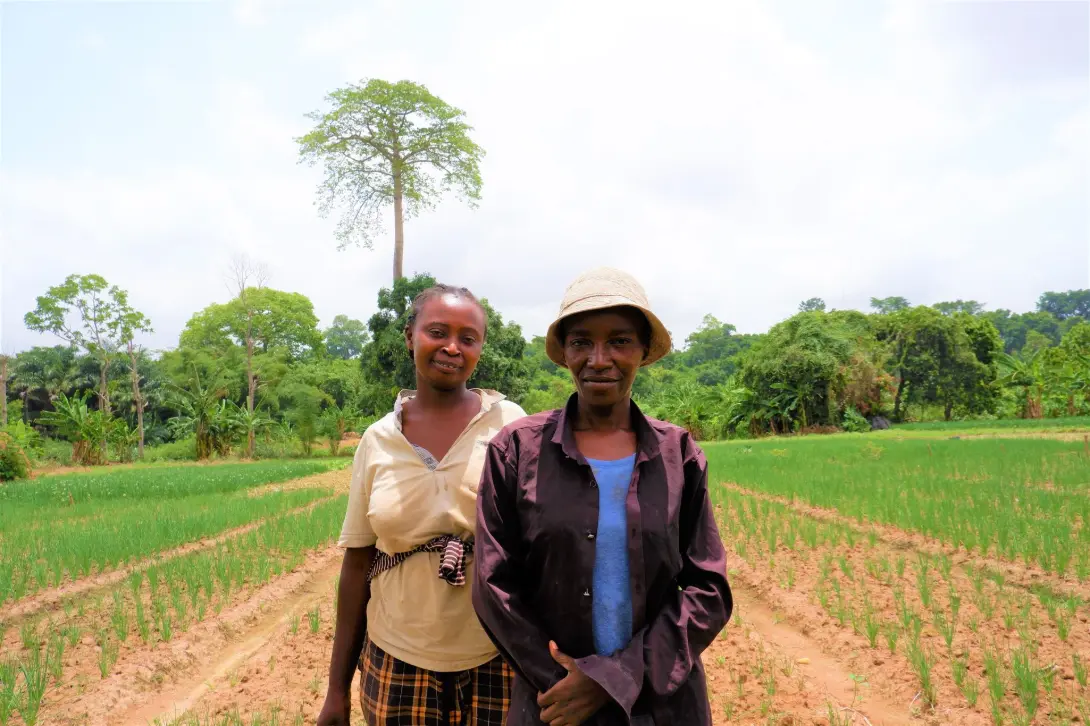
“My child is at the university now, level 300. When I started, he was in primary school. It's the only work I do to take careof him.”
ACHI as a game-changer
Fourteen years ago, Rollande started farming and took her sister as business partner. Together, they currently cultivate over three acres of land and rely solely on farming as their primary source of income. Through farming, Rollande not only supports her family but could also send her son to university. As the Vegetable Growers Association administrator, Rollande was chosen to represent their community in the ACHI programme’s first batch together with the association’s secretary. Initially unfamiliar with the four month course, she embraced the opportunity. The ACHI programme expanded her knowledge in sustainable farming techniques, entrepreneurship, and market accessibility – key elements that helped her elevate her farming operations.
“We are in farming already, certain things were not new for us, but we improve, we learn many things to change the way we do our work. It was very, very nice.”
One of the most valuable things she learned was the use of quality seeds, irrigation systems, crop support structures, and post-harvest handling to maintain high-quality produce. Before the ACHI programme, Rollande never sold per kilo. Customers just came by, bought the product and went. But after implementing the new knowledge, she was able to sell per kilo for the first time.
“The quality of the seed and the fruit was very nice. Because I didn't let it grow on the ground, I made some support. The fruits were clean and nice. That is why someone would buy by kilo."

Overcoming challenges
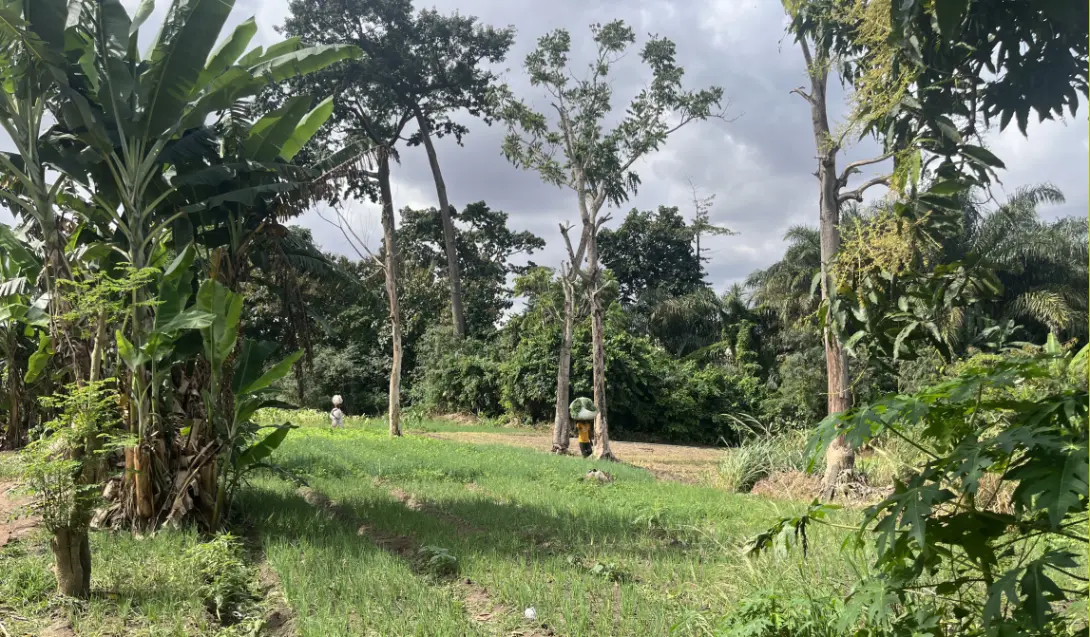
Rollande’s journey has not been without challenges. Farming is a constant cycle of ups and downs, requiring resilience and adaptability. She continuously seeks ways to improve her farming practices and market reach. Her greatest challenge is the market, while always meeting high standards. To stay connected to the market, Rollande sees branding as an important way. It will reach a wider audience, making it easier for buyers to trace and trust her products, and find it back the next time. Moreover, branding makes sure to always aim for the best quality because the product is tracible. With the Vegetable Growers Association, Rollande is under the Ghana Green Label, which aims to promote safe production, processing and distribution of fruits and vegetables using sustainable practices.
Looking to the future
Rollande remains committed to pushing the boundaries of what is possible in farming. Shekeeps educating herself by researching new farming techniques and irrigation methods. One ofher latest findings is rain tape irrigation, a technology she believes can make a difference in farming due to the affordability and accessibility. She also encourages for the introduction of locally made small-scale machinery to ease the burden of land preparation – a major challenge that deters many from entering the farming industry.
“And we can make it [small machinery] locally because we have people who can make it. It can help to plough the fields.”
Despite the obstacles, Rollande continues to grow. Through her efforts, she is not just cultivating crops; she is cultivating change in the horticulture sector, inspiring others to see farming as a viable and rewarding career.
From passion to business: Vivian’s journey
Beyond ‘just’ farming Vivian is a proud alumnus of ACHI and a passionate worker. She is working full-time as an HR specialist from Monday to Friday, and works part-time in the evenings and during the weekends as a mushroom farmer and at her company together with Desmond, creating tea made and supplements from the mushroom.
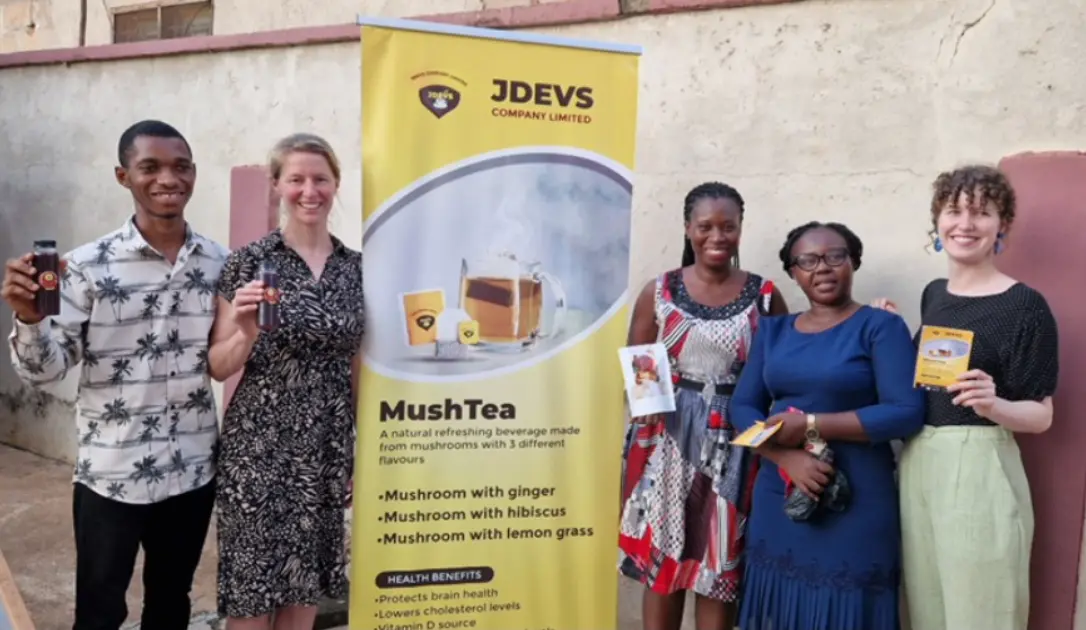
“They were gonna run a four-month course, and it was actually free. I was like, really? Because it costs a lot to participate in these courses.”
Vivian’s journey into farming wasn’t a sudden decision. Before joining ACHI, she already started with mushroom farming due to her interest and passion. Her elder sister, who knew about this passion, came across an ACHI programme advertisement and encouraged Vivian to apply. Even though the programme is about vegetables, the idea of a free four-month course that combined theory and practical skills in vegetable farming intrigued her. With an open mind and willingness to learn, she went for it.
Beyond ‘just’ farming
With no specific expectations, Vivian embraced the programme as an opportunity to expand her knowledge. However, what she gained went beyond vegetable farming. The programme transformed her perspective on horticulture, showing her that farming could be more – it could be a sustainable and profitable business.
“So you could actually sit down and then plan your whole business for a whole season, even get to know your profits margins or profit range and your losses range before you even get into the farming season.”
One of the biggest eye-openers for Vivian was the business side of horticulture. Through lessons on entrepreneurship, business model canvases, and SWOT analyses, she learned how to structure her farming operations strategically. Prior to the programme, she didn’t have a specific planning for her mushroom farm. Now, she tracks her production cycles, calculates her yields, and adjusts her operations based on the two main seasons – the rainy season and the Harmattan.
“So all those things made me know that you can really work with it and you can you can make profit, if you do it right.”
Innovation with mushroom products
The programme didn’t just enhance her vegetable farming skills; it also inspired her and Demond to add value to her mushrooms. They started exploring product diversification, leading to the creation of mushroom tea and powdered mushroom products. This allows them to makeuse of all their yields and limit the waste. With increased demand, they now collaborate with other mushroom farmers to meet supply needs.

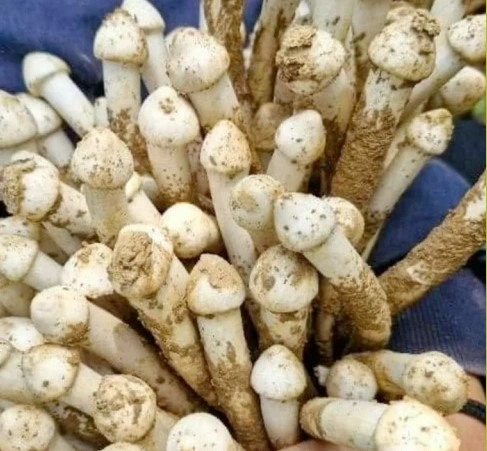
In 2024, four TU Delft students from the Netherlands came with a project to build a eco-friendly solar dryer, so that the mushroom drying process can be speeded up and no electricity is needed. With this innovation, Vivian and Demond can now dry her mushrooms more efficiently and quicker, resulting in an increasement of her capacity to produce products. Vivian’s story proves that farming is a business. By embracing new techniques in processing, collaborating with others, and improving her business knowledge, she has turned challenges into opportunities while having the courage to take the step to start a business in mushroom farming.